
Red Warning Lights: When to Take Immediate Action
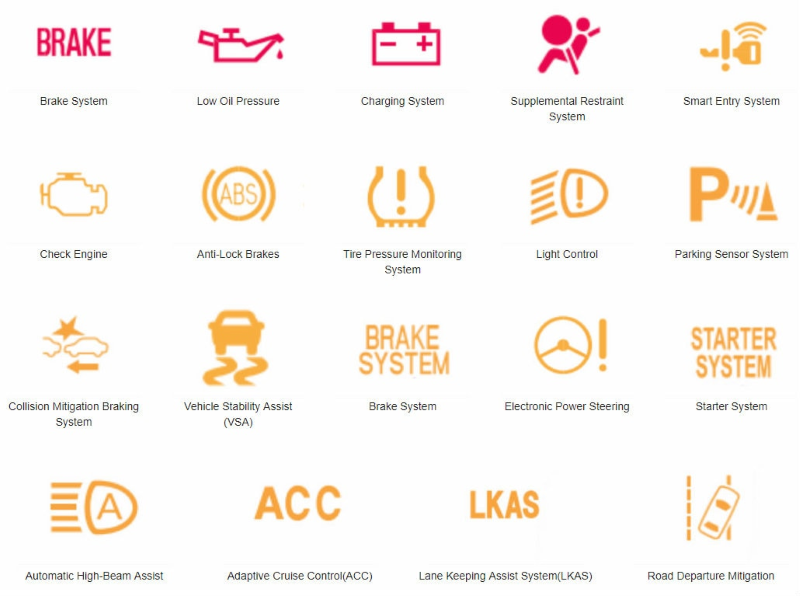
Red dashboard indicators often signal conditions that require immediate attention, although their meanings vary. Some of the most important include:- Low Oil Pressure: Indicates insufficient engine oil pressure. Stop safely, shut off the engine, and check the oil level according to your owner's manual.
- Brake System Warning: May indicate low brake fluid, a braking system malfunction, or an engaged parking brake. Release the parking brake if applicable, and seek immediate assistance if the warning persists or braking feels abnormal.
- Charging System Warning: Indicates a problem with the vehicle's electrical charging system. Stop somewhere safe and arrange prompt professional assistance.
Amber Warning Lights: Problems That Need Attention
Amber or yellow indicators generally identify systems requiring inspection or corrective action. Common examples include:- Check Engine Light: A steady light may indicate an emissions or engine management problem. Avoid high speeds and arrange a prompt inspection.
- Tire Pressure Warning: Indicates significantly low tire pressure or a monitoring system problem. Check your tires and adjust inflation to the recommended levels.
- ABS Warning: Signals a possible anti-lock braking system malfunction. Conventional braking may remain available, but the system requires inspection.
Green and Blue Indicators: General Information
Green and blue dashboard indicators typically communicate normal vehicle functions rather than mechanical problems. Green symbols may indicate active turn signals or cruise control, while a blue headlight symbol commonly identifies high-beam operation. These indicators generally require no service unless they behave unexpectedly.Understanding the Honda Maintenance Minder
The Honda Maintenance Minder uses a wrench symbol and service codes to identify upcoming maintenance needs. Main code A indicates an engine oil change, while code B includes an oil and filter change along with additional inspections. Numbered sub-codes identify services such as tire rotation, filter replacement, transmission fluid service, spark plug replacement, coolant replacement, and brake fluid replacement.Maintenance codes and requirements vary by model and year, so consult your owner's manual for specific instructions. These reminders help you plan routine maintenance rather than indicating an immediate mechanical failure.